Most online solar calculators assume sunny-state sun hours. In Canada, an off-grid system that works in July can run flat in December. Here's the method we use when we design systems, in four steps. The sun-hour figures are our planning numbers for the Parry Sound, Ontario area. Your location will differ, so check your own site with Natural Resources Canada's photovoltaic potential maps or a tool like PVWatts.
Step 1: Add up your daily energy (kWh/day)
List every load: watts × hours per day. A fridge, LED lights, a well pump, a furnace blower and internet add up quickly. Electric heat, electric water heaters and dryers usually make off-grid systems far bigger and more expensive. Most off-grid owners use propane or wood for heat. Our System Builder walks you through it.
Step 2: Choose your battery autonomy
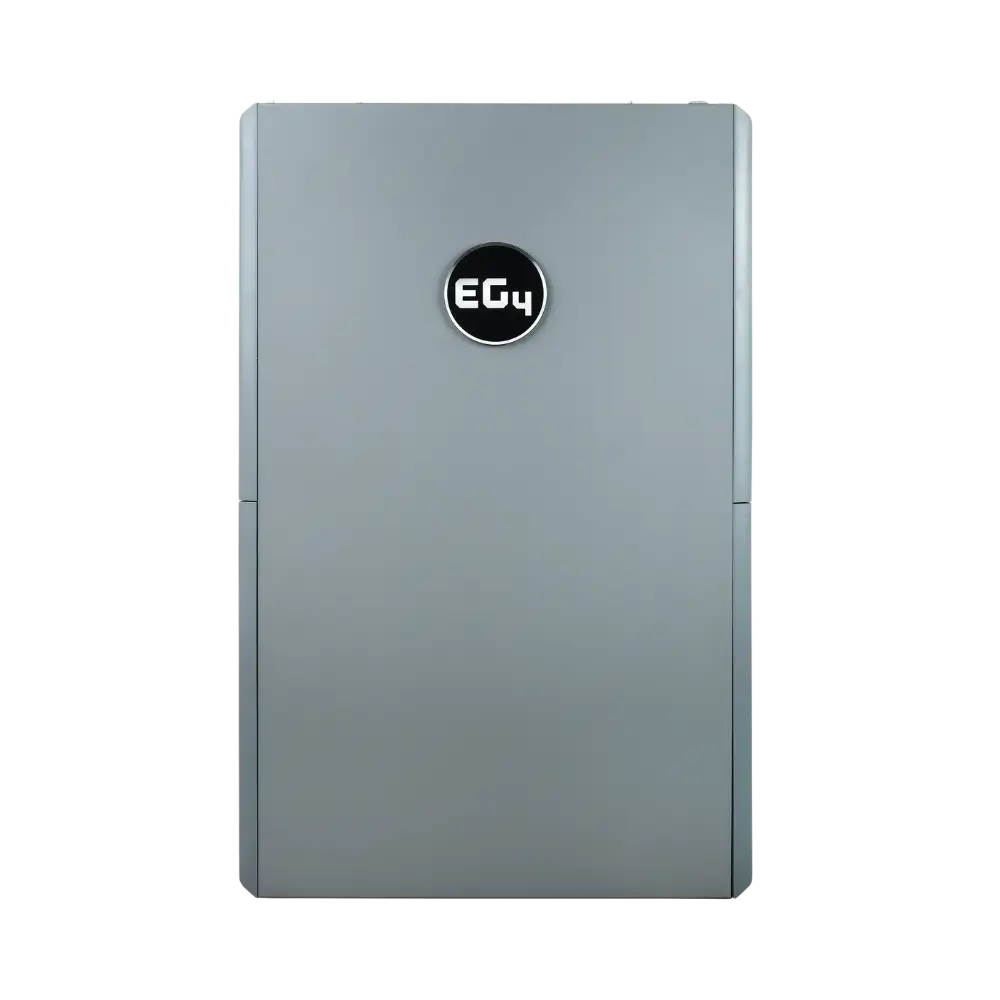
Autonomy means how many days the batteries carry you with little or no sun. Our System Builder plans about two days. For winter use, plan more, or add a generator. One EG4 280Ah WallMount stores 14.3 kWh, and EG4 recommends keeping at least 20% in reserve (80% depth of discharge). That gives roughly 11.4 kWh of usable energy per battery.
| Batteries | Nameplate | Usable at 80% DoD (approx.) |
|---|---|---|
| 1 × 280Ah | 14.3 kWh | ~11.4 kWh |
| 2 × 280Ah | 28.6 kWh | ~22.9 kWh |
| 3 × 280Ah | 42.9 kWh | ~34.3 kWh |
Step 3: Use winter sun hours, not the yearly average
Peak sun hours are the equivalent number of hours of full 1,000 W/m² sunlight per day. For the Parry Sound area we plan around:
| Period | Peak sun hours / day (approx.) |
|---|---|
| December | ~1.7 |
| Year-round average | ~4.2–4.3 |
| Summer | ~6.4 |
Daily production ≈ array kW × sun hours, before losses. Wiring, temperature, inverter, battery and snow cover all reduce it, so don't count on more than about 75–80% of that number. Steeper panel tilts help in winter by catching low sun and shedding snow.
Step 4: Size the array and check inverter limits
Array kW ≈ daily kWh ÷ (sun hours × ~0.75). Then confirm that the inverter's PV input and voltage limits fit. Panel voltage rises in the cold, so string sizing has to use your coldest temperature.
Worked examples (Parry Sound sun hours)
| Use | Load | Array (summer check) | Array (December check) | Storage |
|---|---|---|---|---|
| 3-season cottage | 6 kWh/day | 6 ÷ (6.4 × 0.75) ≈ 1.3 kW; we'd still use ~2.5 kW+ for shoulder seasons | n/a | 1–2 × 280Ah |
| Winter weekends | 8 kWh/day | Easily covered | 8 ÷ (1.7 × 0.75) ≈ 6.3 kW, plus a generator | 2–3 × 280Ah |
| Year-round home | 15 kWh/day | Easily covered | 15 ÷ (1.7 × 0.75) ≈ 11.8 kW, plus a generator | 3 × 280Ah or more |
In practice, most year-round off-grid owners in Canada accept a few weeks of generator top-ups around December and January rather than buying an array sized for the worst week of the year.
Kits that match these sizes
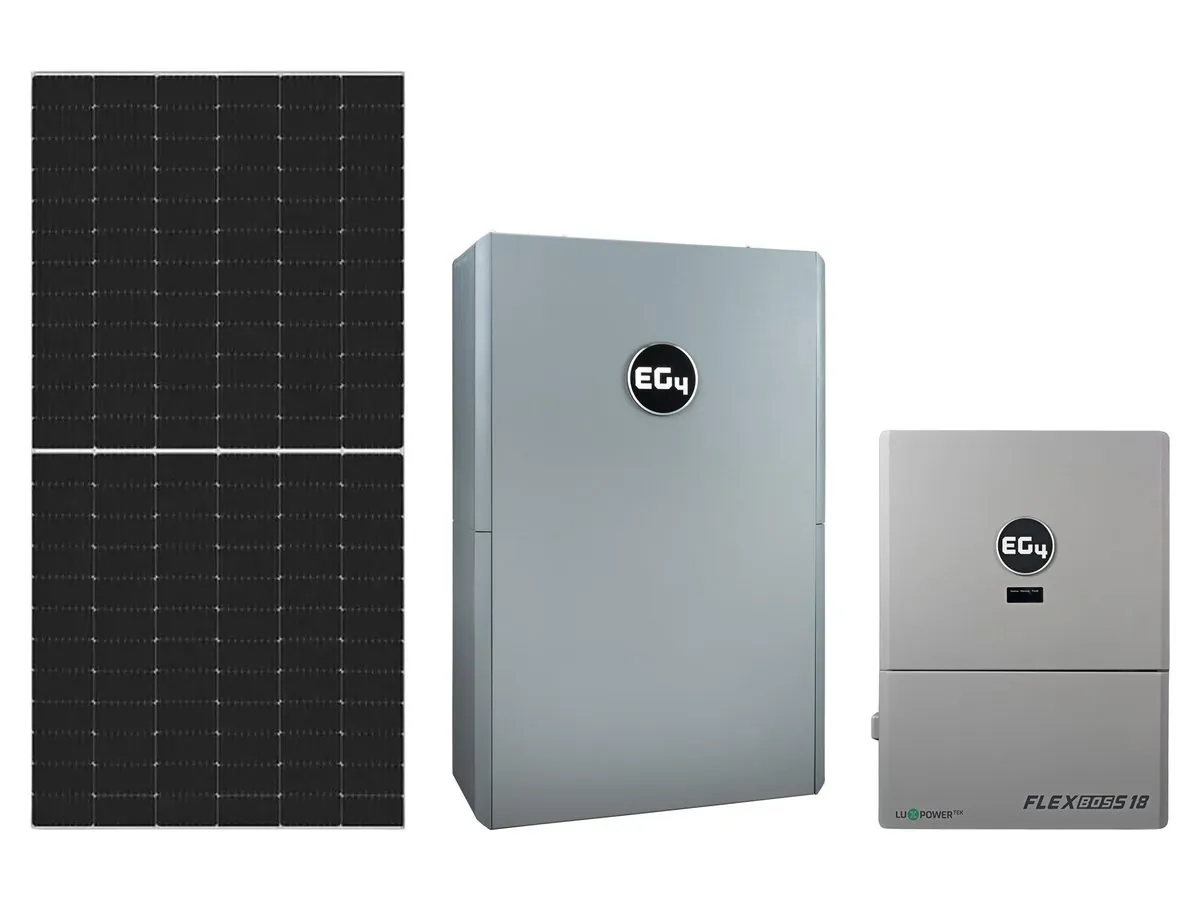
- About 2.5 kW / 14.3 kWh: Outdoor EG4 FlexBOSS Kit, $12,299.00
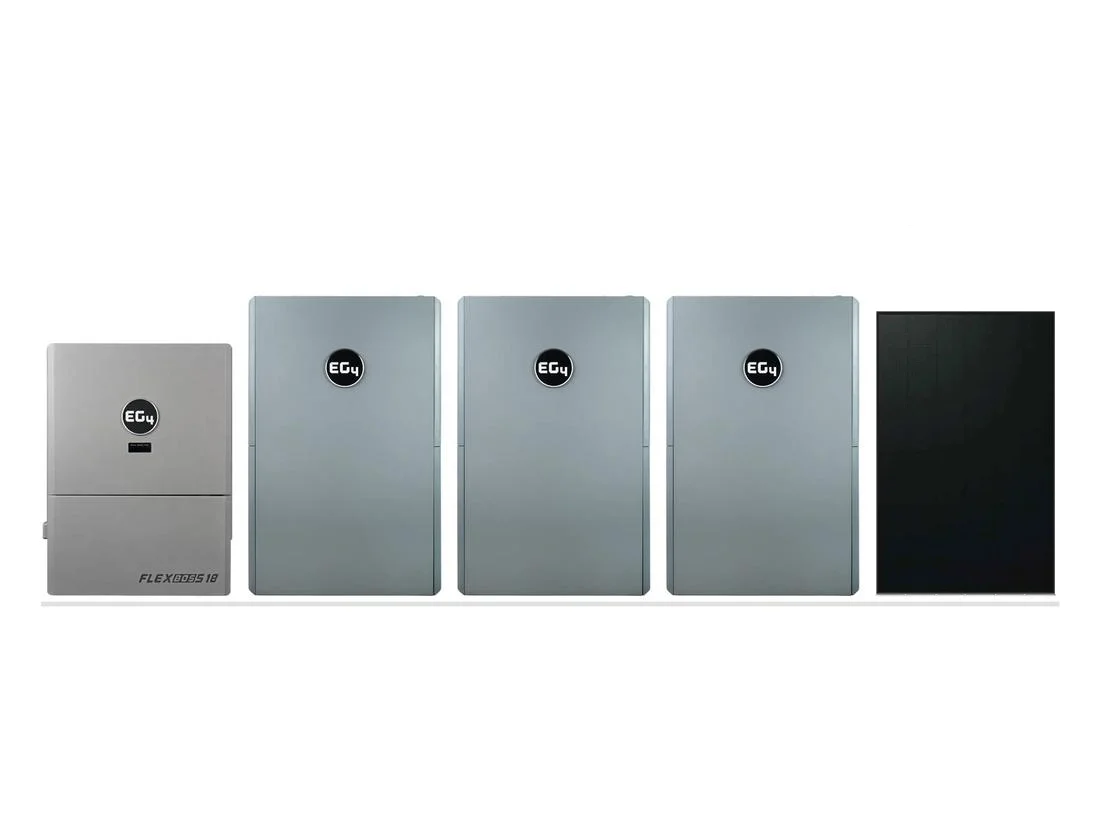
- 10.5 kW / 42.9 kWh outdoor: Winter-Ready Cottage (FlexBOSS18), $27,299.00
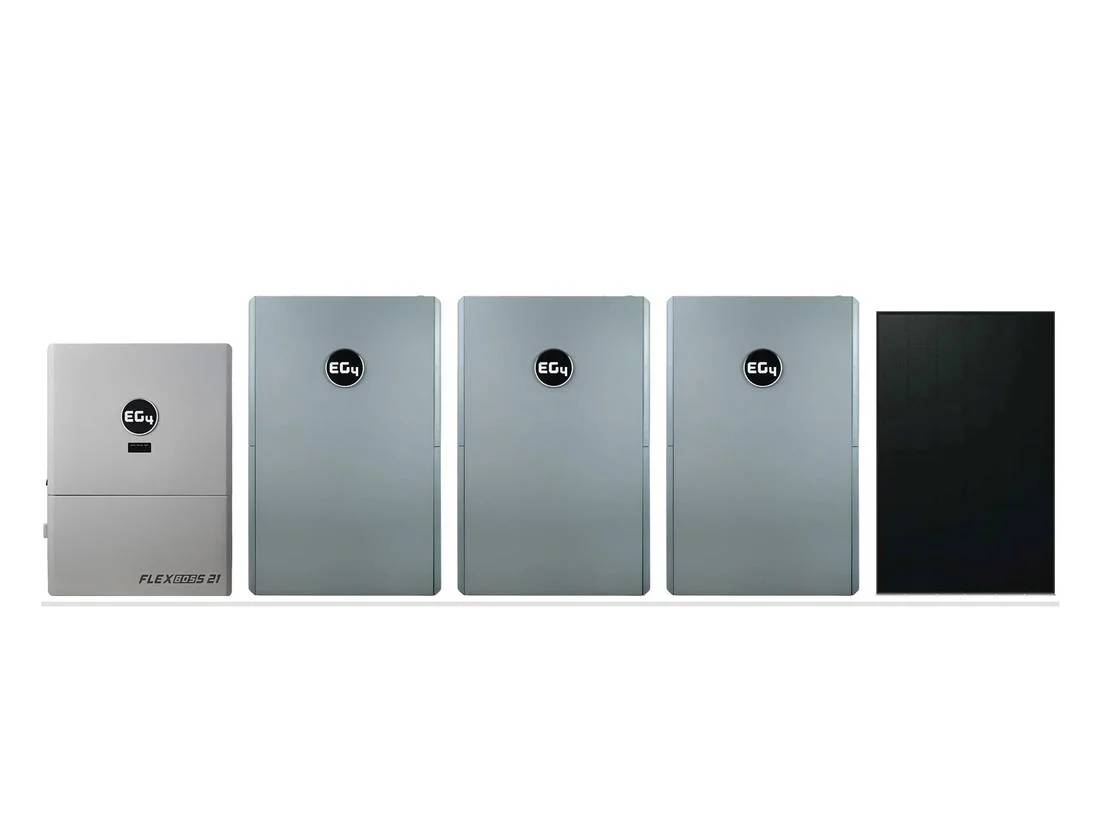
- 12.5 kW / 42.9 kWh outdoor: Island Cottage (FlexBOSS21), $29,699.00
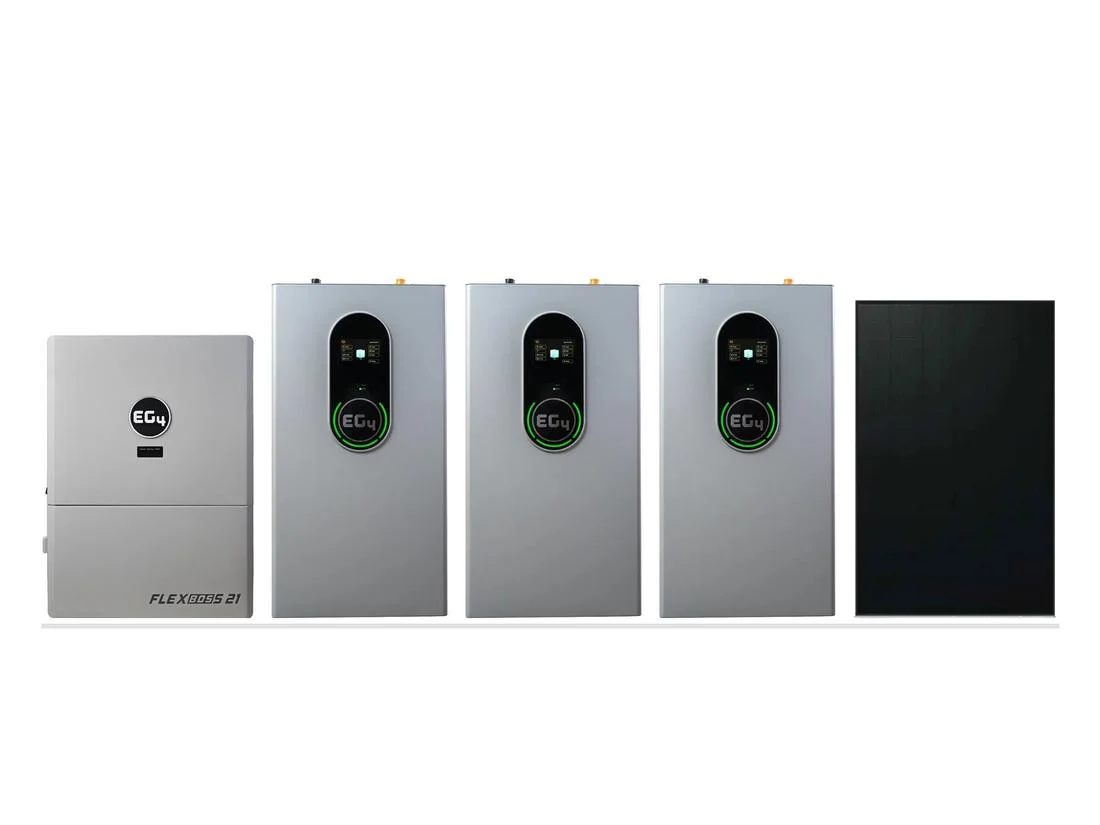
- 10.5 kW / 42.9 kWh indoor: Indoor ESS 840Ah (FlexBOSS21), $27,099.00
Building your own? Individual parts: LONGi 500 W panels ($179.95 each), WallMount All-Weather 280Ah ($5,102.44), WallMount Indoor 280Ah ($4,627.78). For more local detail see Winter solar sizing for Georgian Bay.
Free system consult
Send us your loads, how many months you use the property, and where the panels and batteries would go. We'll send back a matched EG4 parts list for free, with no obligation. Call (705) 346-0796 or email matt@parrysoundsolar.ca.
Products in this guide
Browse: Solar batteries (LiFePO4) · Off-grid & backup solar kits · Solar panels · all kits
Frequently asked questions
How many sun hours does Canada get in winter?
It varies a lot by location. For the Parry Sound, Ontario area we plan on roughly 1.7 peak sun hours a day in December, about 4.2 on average year-round and about 6.4 in summer. Check your own site with NRCan's PV potential maps.
How much battery do I need for off-grid solar in Canada?
Plan at least two days of your daily use, and more for winter, using about 80% of nameplate as usable. One EG4 280Ah battery gives roughly 11.4 kWh usable.
Should I size my array for December?
Fully sizing for December gets expensive. Most Canadian off-grid owners size for the shoulder seasons and use a generator for backup charging in December and January.
Do cold temperatures affect solar panels?
Panels actually produce slightly more voltage and efficiency in the cold. That's why string voltage must be checked against your coldest temperature so you stay under the inverter's input limit. Snow cover is the bigger winter loss.
Can you size my system for me?
Yes. Send us your loads and how you use the property and we'll do a free design. Call (705) 346-0796 or email matt@parrysoundsolar.ca.
More guides
- Best off-grid solar kit for an Ontario cottage
- EG4 18kPV vs FlexBOSS21: which to buy in Canada
- LiFePO4 batteries in Canadian winters
- Cottage solar in Parry Sound: what you need to know
- Off-grid solar kits in Ontario: what a complete kit includes
- Winter solar sizing for Georgian Bay
- EG4 WallMount 280Ah: Indoor vs All-Weather
- FlexBOSS18 vs FlexBOSS21
- EG4 FlexBOSS vs 6000XP: which inverter fits your cottage?
- Buying solar parts online in Canada: shipping, freight and HST
- How many solar panels and batteries for an off-grid cabin?
- 48 V LiFePO4 battery buying guide for Canada: rack-mount vs wall-mount
- How much does an off-grid solar system cost in Canada? (real 2026 prices)
- EG4 GridBOSS explained: whole-home backup with FlexBOSS in Canada
- Generator + solar for off-grid winters in Canada
Planning guidance only. Prices are in CAD as listed on parrysoundsolar.ca on November 19, 2026 and can change; the product page is always current. Specs are from EG4 spec sheets. Final designs should be reviewed for your site, electrical service and code requirements by a licensed professional.